
What a Sales Process Audit Actually Reveals
Most sales leaders who request an audit already have a theory. The pipeline is slow because the market is tough. Close rates are low because the product is priced wrong. Reps are underperforming because they need better training. The audit, in their mind, will confirm what they already suspect and give them a mandate to fix it.
That is rarely what happens.
A proper sales process audit is diagnostic, not confirmatory. And the most consistent finding, across businesses of every size, is that the leaders who commissioned the audit were wrong about where the problem lived.
What You Think You Are Auditing vs. What You Actually Find
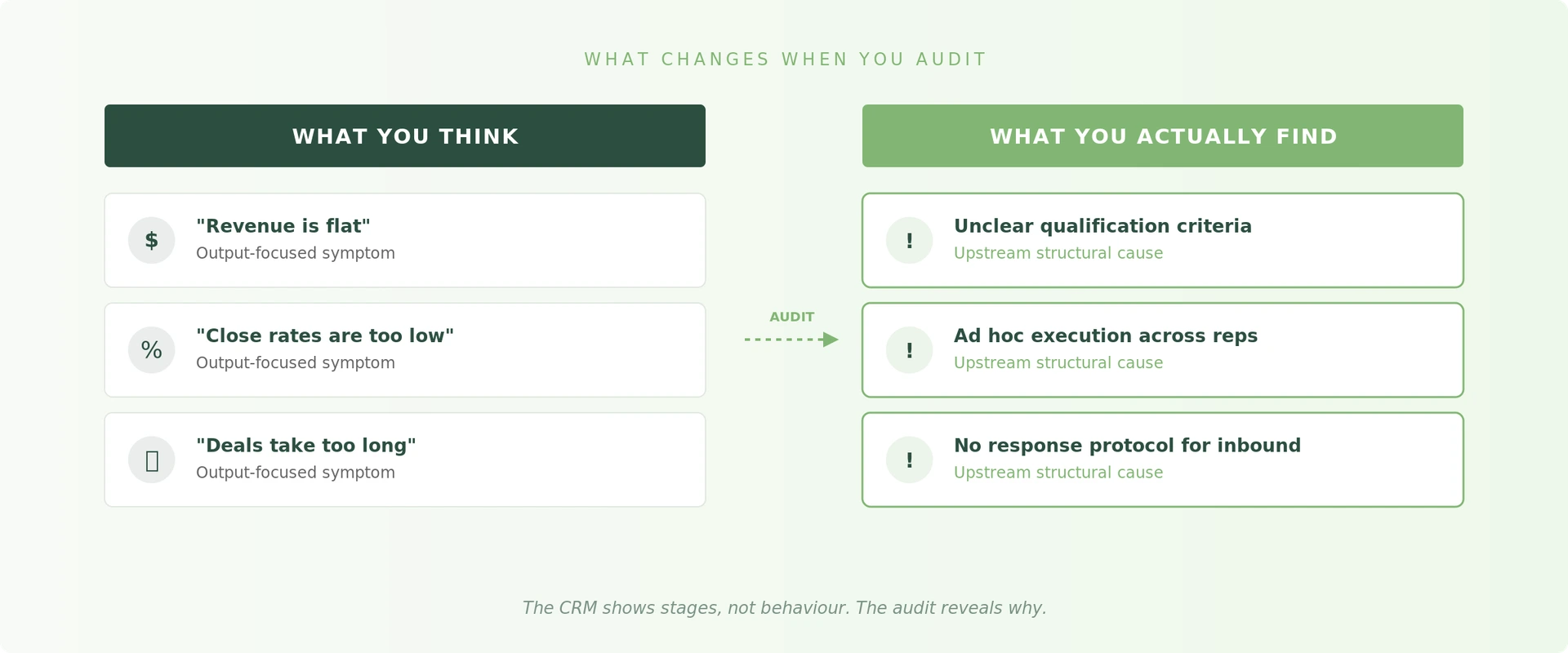
When executives describe their sales problems, the language is almost always output-focused: revenue is flat, quota attainment is poor, deals are taking too long to close. These are real symptoms. They are rarely the root cause.
The audit shifts attention upstream. It looks at how leads are qualified, how discovery conversations are conducted, how proposals are structured, how follow-up is handled, and whether any of this happens consistently. The finding is almost always the same: the process exists on paper, but execution is ad hoc. Every rep is running a slightly different version of the sales process, and the variation is invisible to management because the CRM shows stages, not behaviour.
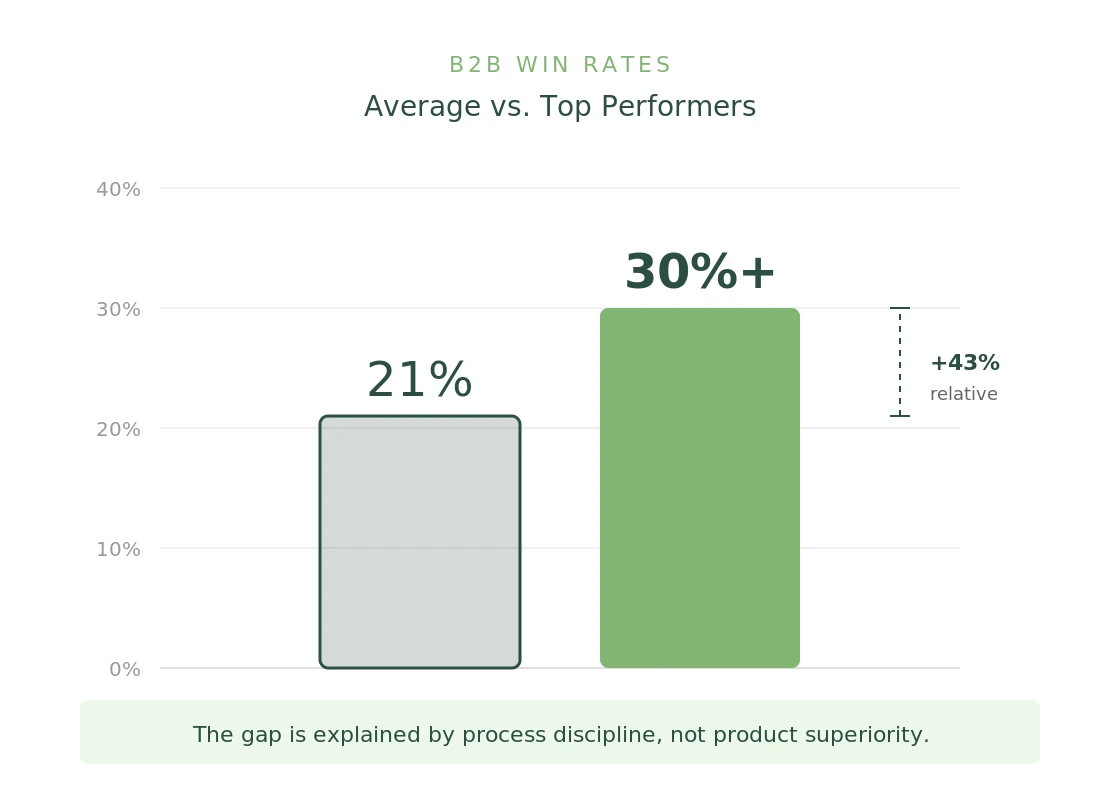
The data reinforces how costly this is. Average B2B win rates sit at 21%, while top-performing teams reach 30% or higher. That gap is rarely explained by product superiority or pricing strategy. It is explained by process discipline
The Three Things a Sales Process Audit Exposes
Where the real revenue is leaking
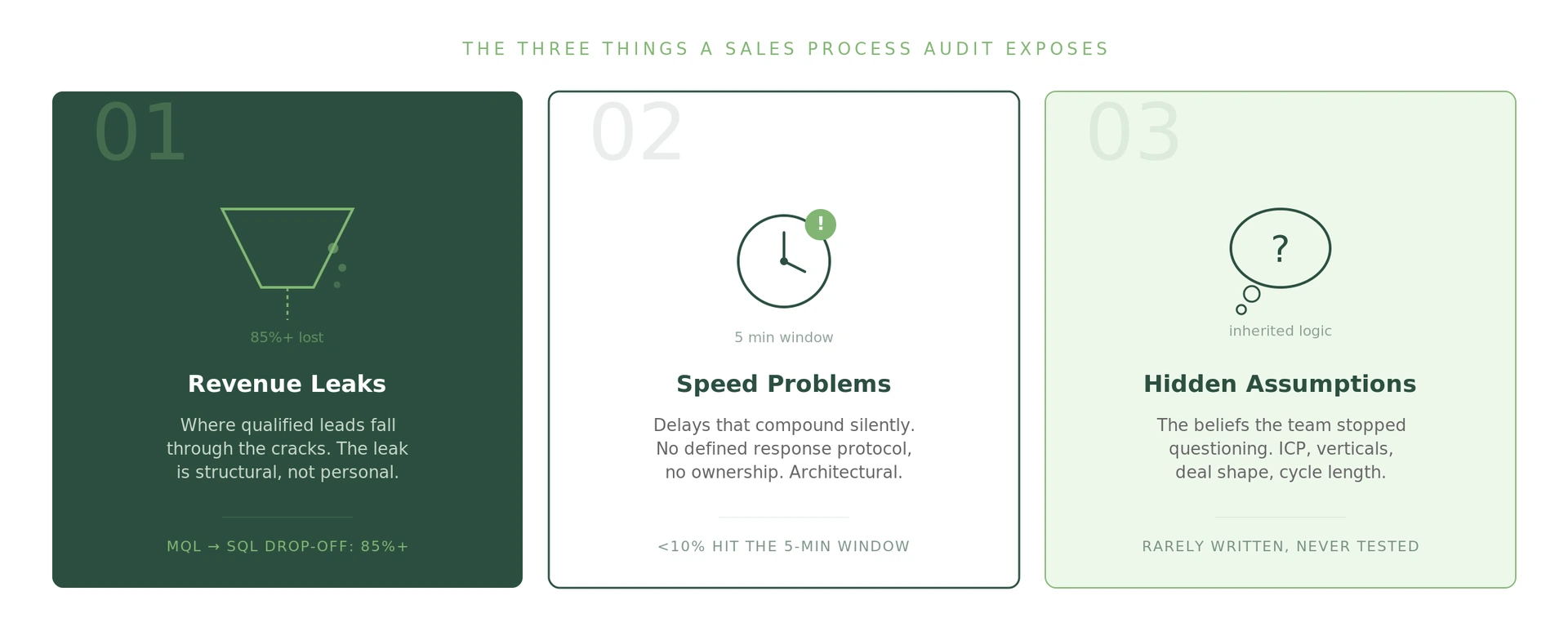
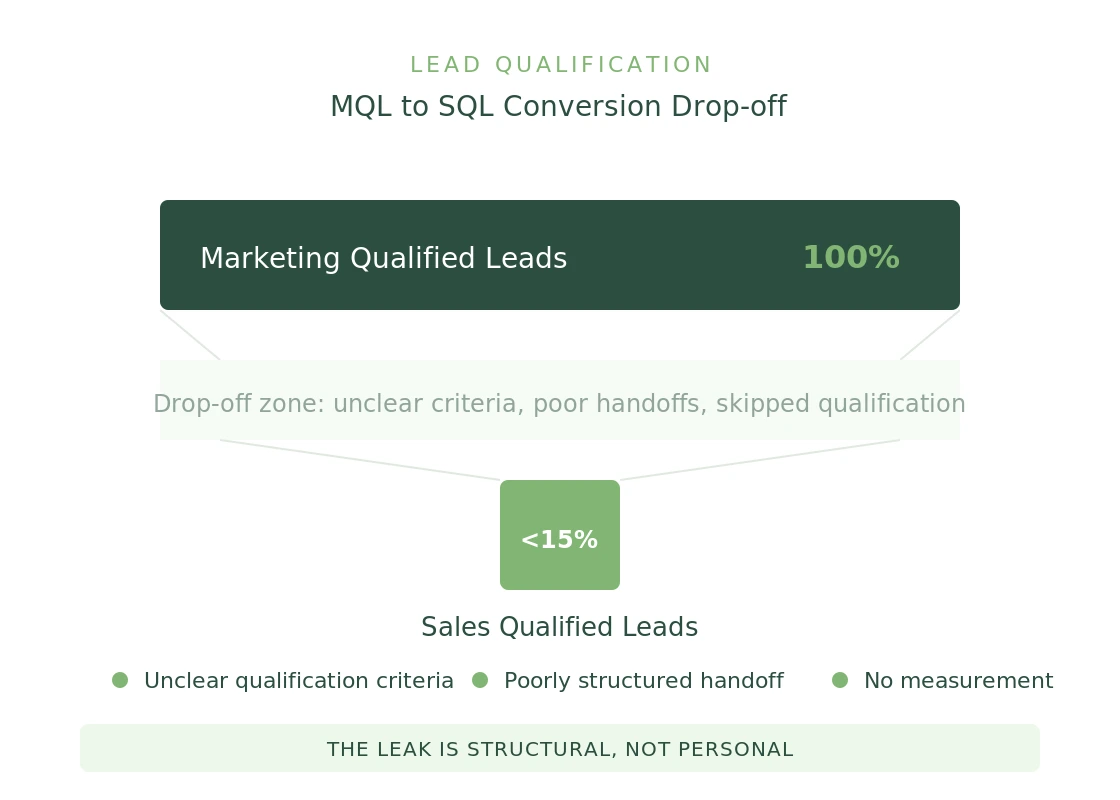
The most commonly cited conversion gap in B2B is between marketing qualified leads and sales qualified leads. Studies consistently show drop-off rates exceeding 85% at this stage. Most businesses know this is a problem. What an audit reveals is why: either the qualification criteria are unclear, the handoff is poorly structured, or reps are skipping qualification steps because no one is measuring them. The leak is structural, not personal.
Speed problems that compound quietly
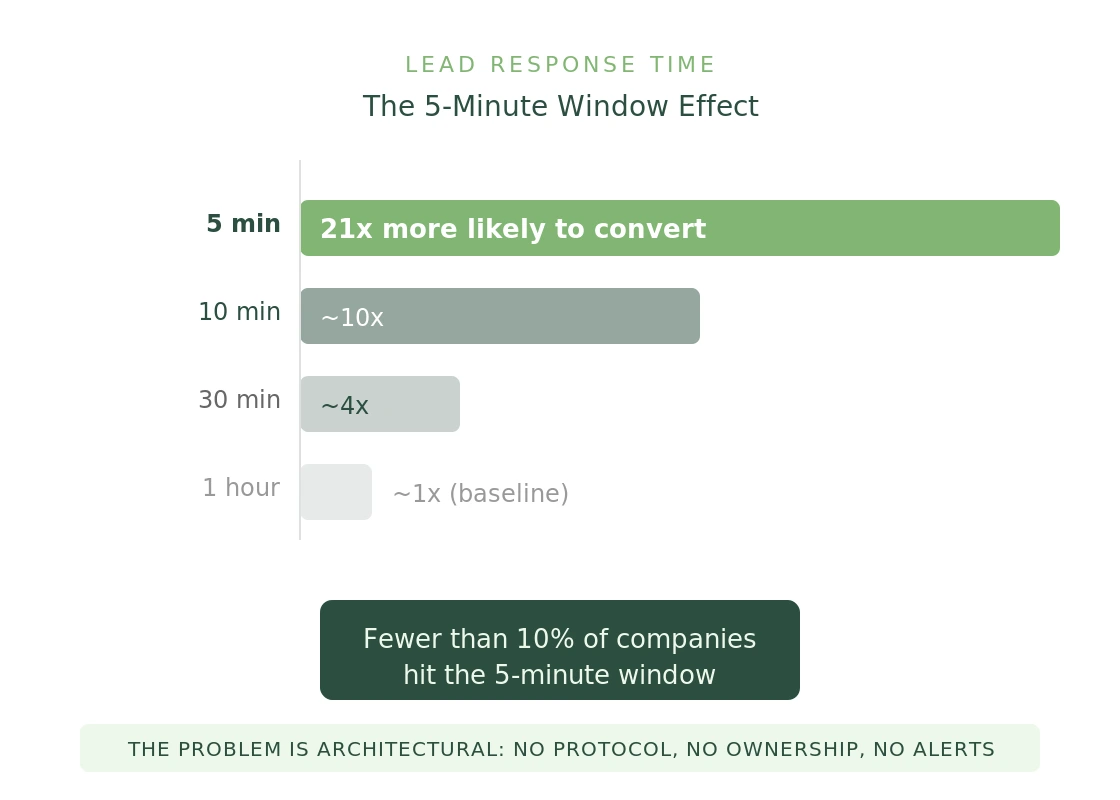
Research shows that leads contacted within five minutes of submitting an enquiry are 21 times more likely to convert. Yet fewer than 10% of companies hit that window. In most audits, the reason has nothing to do with motivation: there is no defined response protocol, no ownership of inbound speed, and no system flagging leads that have gone cold. The problem is architectural..
The assumptions the team has stopped questioning
This is the finding that surprises leaders most. Every sales team carries inherited logic: who the ideal client is, which verticals are worth pursuing, what a good deal looks like, how long a sales cycle should be. These assumptions are rarely written down and almost never tested. An audit surfaces them by examining what is actually in the pipeline versus what leadership believes is there. The gap between intention and reality is almost always significant.
Three Audit Dimensions, Three Fix Horizons
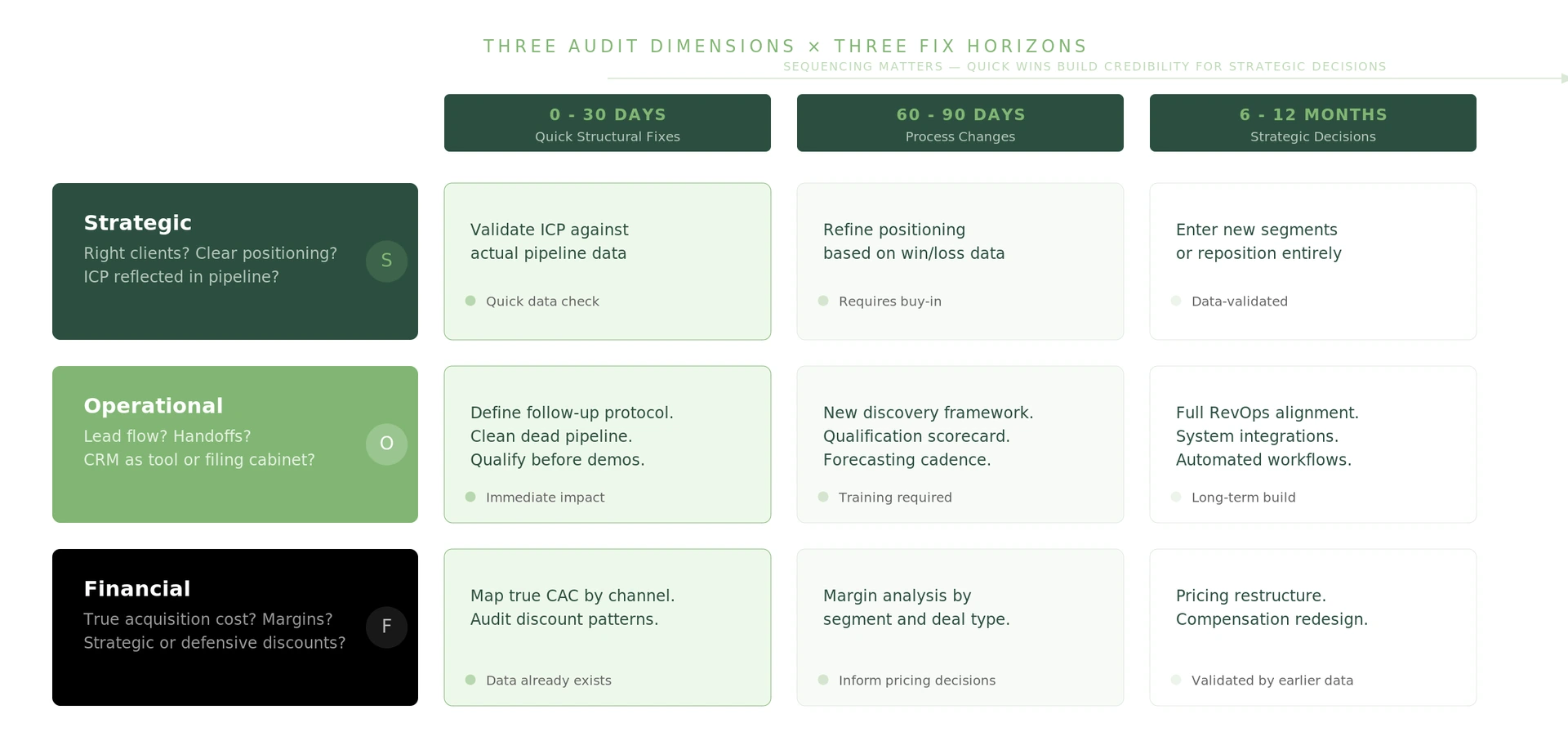
A rigorous sales process audit covers three dimensions:
- Strategic: Is the business targeting the right clients? Is the positioning clear to the buyer? Is the ICP reflected in the pipeline, or has it drifted?
- Operational: How are leads flowing through the funnel? Where are the handoffs? Is the CRM a tool or a filing cabinet?
- Financial: What is the true cost of acquisition? Where is margin strongest? Are discounts being used strategically or defensively?
Each dimension produces findings that sit in one of three fix horizons:
- 0 to 30 days: Quick structural fixes. Qualify before demos. Define a follow-up protocol. Clear the pipeline of deals with no realistic path to close.
- 60 to 90 days: Process changes that require buy-in and training. A new discovery framework. A revised qualification scorecard. A more disciplined forecasting cadence.
- 6 to 12 months: Strategic decisions. Repositioning. New segments. Pricing restructure. These require data from the first two horizons to validate.
The sequencing matters. Quick wins build internal credibility and generate cleaner data for the structural and strategic decisions that follow.
Why External Perspective Changes the Findings
An internal audit has one structural limitation: the team conducting it is the team being audited. Leaders have blind spots around their own decisions. Managers have loyalty to the reps they have coached. Reps have incentives to frame their activity in the best possible light.
An external audit changes the dynamic. There is no political cost to asking uncomfortable questions. There is no inherited assumption about what "normal" looks like. And there is a reference point that internal teams rarely have: what does this look like compared to businesses that are actually hitting their numbers?
This is where the most valuable findings tend to emerge. Behaviours that a team has normalised as "just how we work here" are frequently the precise source of their underperformance.
Only 30% of B2B sales reps hit quota in 2024. The difference between the teams that do and the teams that do not is rarely talent. It is structure, accountability, and the willingness to audit honestly.
The Bottom Line
A sales process audit surfaces what a business cannot see from the inside: the assumptions that have calcified into habits, the gaps that have been explained away, and the structural failures that are costing revenue every quarter. The result is a clear picture of where to act, in what order, and what outcomes to expect.
If your pipeline is inconsistent, your close rates are below where they should be, or your team is busy but results are not tracking, the problem is diagnosable. Start with a structured audit.
Ready to find out where your revenue is actually leaking?
Book a Sales Process Audit with LanziCo and get a clear picture in two weeks.